How to Play Shards of Order
From first launch to your first law — the full loop for launch day and the free demo.
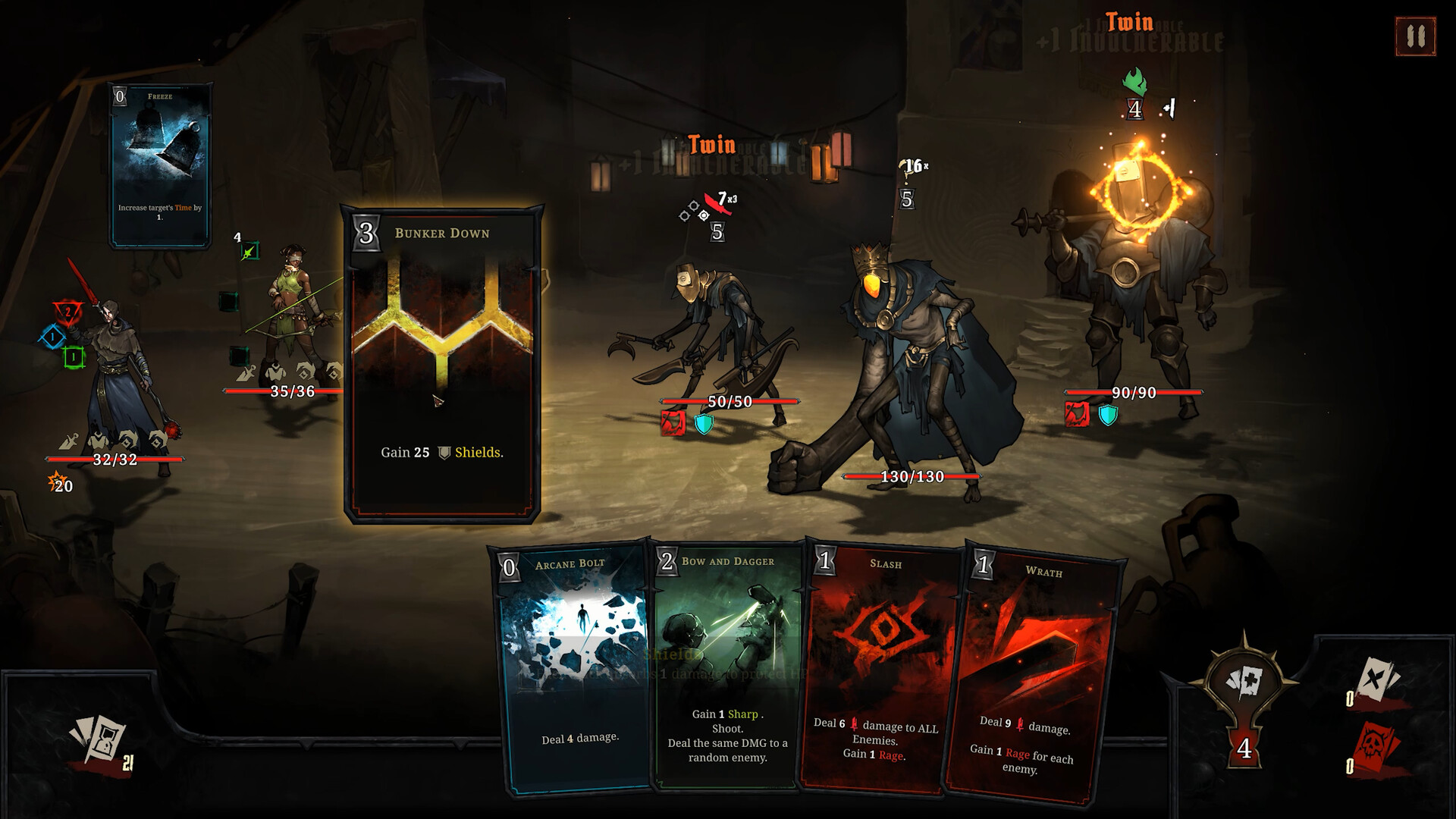
Shards of Order is a dark fantasy card RPG from Fardust and Awaken Realms. The full game launches today, July 28, 2026, at 6 PM CET on Steam PC, and a free demo remains live for anyone who wants to practice before or after unlock. This page explains how to play from a systems perspective — not a roguelite reset loop, but a persistent campaign where Soldier, Scholar, and Exile share one deck and every fight runs on a time counter instead of turns or mana.
Watch the combat explainer above, then use this guide as your map into deeper wiki pages. If you have never installed the game, start with Getting Started and confirm your PC meets System Requirements before the unlock window.
What Shards of Order is (and is not)
Despite a branching node map that looks like many deckbuilders, Shards of Order is not a roguelike and not a roguelite. In a July 24, 2026 Steam news post, the developers emphasized the distinction explicitly: there are no runs, no progression reset, and XP upgrades persist across the campaign. Your save persists, knockouts cripple heroes rather than deleting progress, and the world is handcrafted — not procedurally generated each attempt.
That structure changes how you should play: backtracking for missed equipment is valid, deck thinning matters across the whole campaign, and a bad fight is a tempo problem to solve — not a reason to abandon the save. For the genre contrast in detail, read Getting Started and the Launch Day guide.
Skill tree respec from the start
Launch lets you respec skill points from the beginning of the campaign. The joint skill tree UI includes a large on-screen tip next to the tree pointing players toward respec — the developers highlighted this in July 24, 2026 Steam news so newcomers would not assume locked builds. Experiment with Soldier, Scholar, and Exile allocations early; undo mistakes without restarting the save. Pair respec habits with Builds and Characters before regional bosses.
Your party: three heroes, one deck
At launch the permanent playable roster is fixed at three heroes:
- Soldier — rage and strength frontline pressure.
- Scholar — three mana types fueled by ally damage.
- Exile — four arrow slots for ranged finishers.
Warlock and Bladedancer appear in story but are not permanent roster slots. Every card you add through rewards or gear enters the shared deck, so a defensive injection helps whichever hero is targeted next fight. Hero-specific resources still matter — Scholar mana generation, Soldier rage scaling, Exile arrow consumption — but the draw pile is party-wide. Browse Characters for kit summaries before you commit skill points on the joint skill tree.
Core combat: time, not turns
Fights have no turns and no mana pool. A time counter governs everything you do:
- Playing a card spends the time printed on that card and advances enemy countdowns.
- Drawing costs time unless you already played three or more cards in the current sequence — then your next draw is free.
- Movement costs one time per reposition.
Because enemies charge abilities on visible timers, every action accelerates the battlefield clock. Reading telegraphs before spending a high-cost finisher is as important as building a strong deck. The Combat System guide covers countdown math, knockouts, and crippled-state recovery in full.
Redraw timer and combat queue (launch rules)
Launch reworked pacing beyond what early demo players remember. Two systems define day-one flow:
Redraw timer starts at 4
When the redraw timer hits zero, the party redraws from the shared deck. At launch the timer starts at 4. Reduction is time-linked: a card that costs 3 time reduces the timer by 3. Movement costs 1 time and also reduces redraw by 1.
This replaces demo habits of spamming cheap cards to cycle hands quickly. Deliberate time spending keeps redraws predictable — critical because Fracture punishes careless redraws (see below). Full walkthrough: Redraw and Queue.
Combat queue
Launch lets you queue card sequences before animations finish, so fights flow faster than demo stop-and-start pacing. Queue defensive tools before rage spenders or Scholar finishers; queued actions still spend time and tick countdowns when they resolve. Pair queue habits with telegraph reading from Combat System.
Fracture: the cost of careless revives
Fracture is launch’s primary knockout tax beyond crippled heroes. Each revive adds one Fracture stack. On every redraw, each stack deals 6 damage to each of the three party members. Maximum 3 stacks means 18 damage per hero per redraw — enough to turn a sloppy recovery into a wipe.
Unused revive cards can also clog the shared deck, making future draws worse. The lesson for how to play: stabilize countdowns before reviving, carry revive-enabling gear on risky routes, and treat redraws as dangerous events when stacks are high. Rules and law-restoration context: Laws and Fracture.
Map, regions, and laws
Outside combat you navigate a branching node map you can revisit. Launch ships three unique regions beyond the demo dungeon — each with handcrafted bosses, exploration gates, and law restoration that changes how systems behave. Gods interfere with mischief-themed consequences tied to narrative choices.
The demo teaches one dungeon slice; the full game expands regional pacing and boss variety. When you leave the opening area, read Regions and World for exploration priorities and how laws interact with combat economy.
How to start on launch day
If you own or are buying the full game today:
- Confirm System Requirements — Windows 10/11, DirectX 12, 4 GB storage.
- Open Steam at 6 PM CET and install or update from your library.
- Follow the in-game tutorial and joint skill tree UI for all three heroes.
- Read Redraw and Queue before your first launch-era boss.
If you are learning on the free demo first:
- Install demo app 3672010 from the main Steam listing (3432480).
- Use Getting Started and the Demo Walkthrough for node order.
- Expect launch rules to differ from your earliest demo sessions — check Launch Day for the diff.
Session-to-session loop
A typical play session loops like this:
- Pick a node on the map — fight, rest, shop, or story beat.
- Fight using time-counter sequencing and optional queue inputs.
- Collect gear that injects new cards; trim weak cards when offered.
- Adjust skills on the joint tree for Soldier, Scholar, and Exile together.
- Restore laws when the campaign offers choices that reshape rules.
- Backtrack if a boss outpaces your current deck — persistent RPG, not a wipe.
Deck theory lives in Deckbuilding and Builds; simulate counts on the Deck Calculator between sessions.
Common new-player mistakes
Assuming roguelike or roguelite resets. Progress and XP upgrades persist — plan recovery and respec, not rerolls.
Missing the respec tip. The skill tree shows a large UI hint for respec from day one — use it before committing to a bad allocation.
Drawing before the three-card threshold. Free draws are a core resource; structure sequences to earn them.
Ignoring movement’s time and redraw cost. One step can delay a finisher or accelerate redraw — budget both.
Revive spam under Fracture. Stacks snowball redraw damage; read Laws and Fracture before treating knockouts lightly.
Building three separate decks mentally. Gear and rewards affect one shared pile — dilution hurts everyone.
Where to go next
| Goal | Read next |
|---|---|
| Install and first hour | Getting Started |
| PC specs and controller | System Requirements |
| Time counter deep dive | Combat System |
| Redraw and queue | Redraw and Queue |
| Fracture and laws | Laws and Fracture |
| Launch unlock checklist | Launch Day |
| Hero kits | Characters |
Shards of Order rewards players who learn the time economy once and apply it across regions. Bookmark this page and the Guides hub as you progress past launch night.
Frequently Asked Questions
Quick answers to the most common questions.
Is Shards of Order a roguelike or roguelite?
Neither. Developers confirmed in July 2026 Steam news: no runs, no progression reset, XP upgrades persist. It is a persistent dark fantasy RPG with a revisitable map and shared deck progression.
Can I respec skill points at launch?
Yes. Respec is available from the start. The joint skill tree UI includes a large tip next to the tree — highlighted in July 24, 2026 Steam news.
How does combat work without turns or mana?
A time counter governs card plays, draws, and movement. Enemy countdowns advance whenever you spend time. Read the Combat System guide for details.
Which heroes can I play at launch?
Soldier, Scholar, and Exile are the permanent party. Warlock and Bladedancer appear in story but not as permanent roster slots.
What is the redraw timer at launch?
It starts at 4. Time spent on cards and movement reduces it. When it hits zero, the party redraws — Fracture stacks add damage on redraw.
How much damage does Fracture deal?
Each stack deals 6 damage to each hero on every redraw, up to 3 stacks for 18 damage per hero per redraw.
Can I play on launch day without buying yet?
Yes. The free Steam demo remains live. Full game unlocks July 28, 2026 at 6 PM CET on Steam PC.