Shards of Order Guides
Every mechanic explained — from demo runs to launch redraw rules, regions, and law restoration.
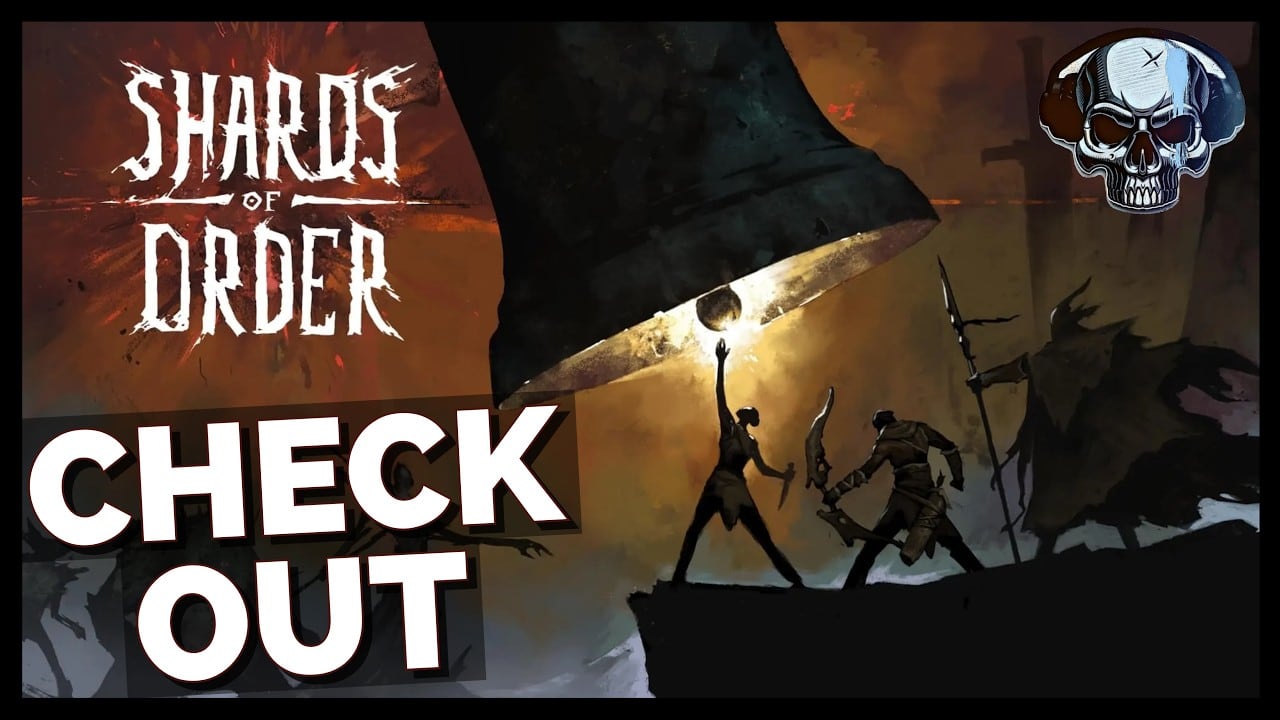
Welcome to the central guide hub for Shards of Order, the dark fantasy card RPG from Fardust and Awaken Realms launching on Steam PC July 28, 2026 at 6 PM CET. A free demo remains live on Steam (demo app 3672010, main listing 3432480), and this section collects every in-depth tutorial on the wiki so you can jump straight to the topic you need without hunting through unrelated pages.
Shards of Order is not a roguelite. Progress persists, there is no permadeath wipe, and runs are not procedurally generated. You explore three unique regions on a revisitable map, manage a shared party deck across Soldier, Scholar, and Exile, and reshape the world’s rules through law restoration while gods meddle from the shadows. Launch reworks Fracture stack math, redraw timer 4, and combat queue sequencing — see Launch Day and Demo Changes for the diff summary.
New to the game
If you have never launched the demo, begin with the Getting Started guide. It walks through installation, the three demo heroes (Soldier, Scholar, Exile), and the core loop that separates this RPG from turn-based card battlers. Pair it with the Controls guide so you understand movement, card selection, and the time-counter HUD before your first fight.
The Demo Walkthrough covers the full roughly forty-five-minute dungeon from first node to final encounter, including when to rest, which gear to prioritize, and how to avoid unnecessary knockouts. For a spatial overview of nodes and revisit routes, see the Demo Map guide.
Combat and deck theory
Combat is the heart of Shards of Order and it works unlike most card games. There are no turns and no mana pool — only a shared time counter where every card costs time and advances enemy countdowns. The Combat System guide explains draw rules (including the free draw after three cards played), movement costs, and a demo versus launch subsection for redraw and queue changes.
Launch adds a dedicated Redraw and Queue guide covering redraw timer 4, time-linked reduction, movement’s redraw effect, and combat queue sequencing before animations finish. Pair it with Laws and Fracture for Fracture stacks — 6 damage per hero per stack on redraw, max 3.
Once you grasp timing, move to Deckbuilding for shared-deck construction, gear injection, and thinning strategies. The Builds guide applies those principles to concrete party compositions, while the Items and Cards guide catalogs demo gear, card pools, and which equipment adds which cards to your shared pile. Use the Deck Calculator when you want to simulate card counts before committing in-game.
Bosses, laws, regions, and endgame systems
The demo packs nine encounters across twelve enemy types, including two bosses and one miniboss. The Boss Guide breaks down each fight’s patterns, recommended card sequences, and knockout recovery tactics. Full launch adds handcrafted regional bosses across Regions and World — three unique areas with law restoration gates and map revisiting beyond the demo single dungeon.
For the broader narrative frame — how law restoration reshapes rules and how divine mischief threads through encounters — read Laws and Fracture, which documents launch Fracture math and revive deck clogging.
Reviews and meta context
Unsure whether the demo is worth your evening? The Review guide summarizes strengths, limitations of the demo slice, and how the full game differs from roguelite card titles players often compare it to. Cross-check character rankings on the Tier List and Character Tier List pages, and browse the Players hub for individual hero deep dives.
Related wiki sections
Beyond guides, the Wiki overview links lore summaries and glossary terms, while Updates tracks launch timing and patch notes. Launch Day is the day-one checklist; Release Date holds specs and trailers. Guides cover demo content plus launch systems confirmed ahead of July 28.
Recommended reading order
- Getting Started and Controls
- Combat System and Redraw and Queue
- Deckbuilding and Laws and Fracture
- Demo Map then Demo Walkthrough
- Items and Cards and Builds
- Boss Guide and Regions
- Launch Day before unlock
- Review when deciding on a purchase
Every guide below cross-links siblings, so you can also enter from any topic and navigate sideways. Bookmark this hub if you plan multiple demo attempts — the persistent map means revisiting nodes with new knowledge is part of the design.
Frequently Asked Questions
Quick answers to the most common questions.
Where should a first-time demo player start?
Read Getting Started and Controls, then follow the Demo Walkthrough while referencing the Combat System guide whenever a fight feels unclear.
Is Shards of Order a roguelite like Slay the Spire?
No. It is a persistent RPG with a revisitable branching map, no permadeath wipe, and no procedural run generation. Guides here reflect that structure.
Do these guides cover content outside the demo?
Yes. Launch systems including redraw timer 4, combat queue, Fracture stacks, three regions, and roster cuts are documented alongside demo encounter details.
How do guides relate to the tier list?
Guides explain mechanics and strategy; the tier list ranks characters and cards for quick meta reference. Use both together when planning builds.
Can I use the deck calculator with guide builds?
Yes. The Deck Calculator tool accepts the card injections described in Deckbuilding, Builds, and Items and Cards guides.